
Are Fitness Trackers FSA Eligible? Complete 2026 Guide
If you’re wondering are fitness trackers FSA eligible, the answer is: sometimes. Fitness trackers can qualify for reimbursement through a Flexible Spending Account (FSA) or Health Savings Account (HSA), but only under specific medical conditions and documentation requirements.
🔥 Discover Trending Content
Explore today's featured content with one click.
New Free Games Added Today!
Discover fun new games and explore what's trending today. Check out the latest additions and start exploring.
🎮 Check Them OutWith wearable technology becoming more advanced, many people use fitness trackers to monitor heart rate, sleep quality, activity levels, and even chronic health conditions. Because of this, the IRS has allowed some fitness trackers to become eligible medical expenses when prescribed for a legitimate health reason.
In this guide, you’ll learn:
- Which fitness trackers are FSA eligible
- Eligibility requirements
- How reimbursement works
- Best approved devices
- Common mistakes to avoid
- FAQs and expert tips
What Is an FSA?
A Flexible Spending Account (FSA) is a tax-advantaged account that lets employees use pre-tax dollars for qualified healthcare expenses.
Typical FSA-eligible expenses include:
- Prescription medications
- Doctor visits
- Medical devices
- Blood pressure monitors
- Diabetes management tools
- Certain wearable health devices
You may also want to read:
- What Is an FSA Account and How Does It Work
- Best FSA Eligible Medical Devices
- Can You Use FSA for Gym Memberships?
Are Fitness Trackers FSA Eligible in 2026?
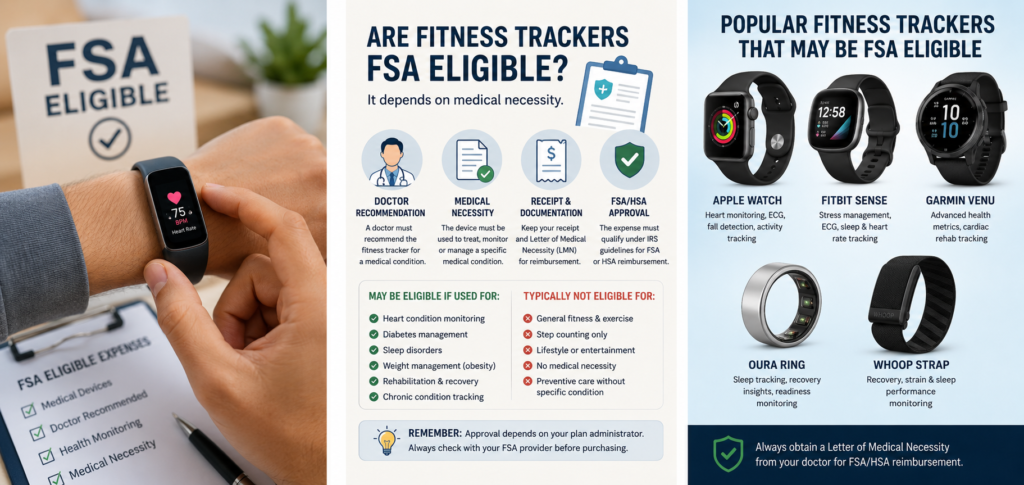
Yes, some fitness trackers are FSA eligible in 2026 — but only when they are used to treat, monitor, or manage a medical condition.
Most standard consumer fitness trackers are considered general wellness products and are not automatically eligible. However, they may qualify if:
- A doctor recommends the device
- It is medically necessary
- You have a Letter of Medical Necessity (LMN)
When Are Fitness Trackers Considered FSA Eligible?
Fitness trackers may qualify when used for conditions such as:
- Obesity management
- Heart disease monitoring
- Hypertension
- Diabetes management
- Sleep disorders
- Rehabilitation programs
- Chronic illness tracking
For example, a physician may prescribe a wearable device to help monitor cardiovascular activity after surgery or support weight-loss treatment.
Fitness Trackers That May Be FSA Eligible
Some popular devices that may qualify with medical documentation include:
| Fitness Tracker | Possible FSA Eligibility | Medical Use Cases |
|---|---|---|
| Apple Watch | Sometimes | Heart monitoring, ECG |
| Fitbit Sense | Sometimes | Sleep tracking, stress monitoring |
| Garmin Watches | Sometimes | Cardiac rehab tracking |
| Oura Ring | Sometimes | Sleep disorder management |
| WHOOP Strap | Sometimes | Recovery and health monitoring |
Remember: eligibility depends more on medical necessity than the brand itself.
FSA Eligible vs Non-Eligible Fitness Trackers
| Eligible Situation | Non-Eligible Situation |
|---|---|
| Doctor-prescribed health monitoring | General fitness use |
| Chronic condition management | Casual workout tracking |
| Medical rehabilitation | Lifestyle or entertainment |
| Sleep disorder treatment | Counting daily steps only |
How to Get Reimbursed for a Fitness Tracker
To use your FSA funds successfully, follow these steps:
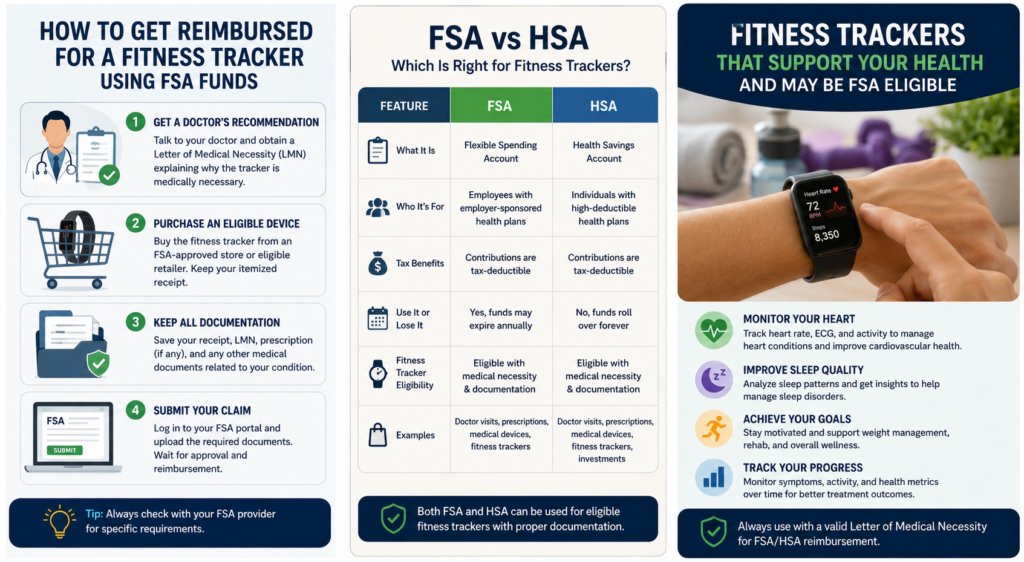
1. Get a Doctor’s Recommendation
Ask your healthcare provider for a Letter of Medical Necessity explaining why the tracker is medically required.
2. Purchase an Eligible Device
Buy the device from a reputable retailer or FSA-approved store.
3. Keep All Documentation
Save:
- Receipts
- Medical notes
- LMN forms
- Insurance records
4. Submit Your Claim
Upload documents through your FSA administrator portal.
Best FSA Eligible Fitness Trackers in 2026
Apple Watch
The Apple Watch includes ECG monitoring, heart-rate alerts, fall detection, and sleep tracking. It’s one of the most commonly approved smartwatches for medical monitoring.
Fitbit Sense
Fitbit Sense offers stress monitoring, ECG functionality, and sleep analysis, making it useful for health-focused users.
Garmin Venu Series
Garmin devices are often used for cardiac rehabilitation and advanced activity monitoring.
Oura Ring
Popular for sleep tracking and recovery insights, especially for users managing sleep disorders.
Do You Need a Letter of Medical Necessity?
In most cases, yes.
A Letter of Medical Necessity should include:
- Your diagnosed condition
- Why the tracker is needed
- Expected treatment benefits
- Physician signature
Without this documentation, your claim may be denied.
Can You Use an HSA for Fitness Trackers?
Yes. The same rules usually apply to HSAs (Health Savings Accounts).
Both FSA and HSA plans generally require:
- Medical necessity
- Supporting documentation
- Approved health-related use
Common Reasons FSA Claims Get Denied
Avoid these mistakes:
- Buying a tracker for general fitness
- Missing receipts
- No doctor documentation
- Submitting incomplete forms
- Using the device mainly for lifestyle tracking
Pros and Cons of Using FSA Funds for Fitness Trackers
| Pros | Cons |
|---|---|
| Tax savings | Requires documentation |
| Helps manage chronic conditions | Not all devices qualify |
| Supports preventive healthcare | Approval varies by provider |
| Encourages healthier habits | Claims may be rejected |
Frequently Asked Questions
Are Apple Watches FSA eligible?
Yes, Apple Watches can be FSA eligible if prescribed for a medical condition and supported with documentation.
Is Fitbit covered by FSA?
Fitbit devices may qualify when used for medical monitoring or treatment purposes.
Can I buy a smartwatch with FSA funds?
Possibly. Smartwatches used primarily for health treatment or monitoring may qualify.
Do I need a prescription for a fitness tracker?
Usually, you need a Letter of Medical Necessity from a healthcare provider.
Are fitness trackers automatically FSA approved?
No. Most fitness trackers are not automatically eligible without medical justification.
Can I use HSA funds instead of FSA?
Yes, HSA funds may also be used if the device qualifies medically.
Final Thoughts
So, are fitness trackers FSA eligible? The answer depends on how the device is used. If your fitness tracker supports treatment, monitoring, or management of a medical condition — and you have proper documentation — you may be able to use FSA or HSA funds for reimbursement.
Before purchasing, always verify eligibility with your FSA administrator to avoid denied claims.