

Are Fitness Trackers Worth It? A Complete Guide for Smart Buyers
In recent years, wearable technology has become one of the fastest-growing segments in personal health. From counting steps to monitoring sleep and heart rate, millions of people now rely on digital devices to stay active. But many consumers still ask the same question: are fitness trackers worth it?
🔥 Discover Trending Content
Explore today's featured content with one click.
New Free Games Added Today!
Discover fun new games and explore what's trending today. Check out the latest additions and start exploring.
🎮 Check Them OutThe answer depends on your health goals, lifestyle, and expectations. For some people, a fitness tracker can be a life-changing tool that improves daily habits. For others, it may become an expensive gadget that ends up forgotten in a drawer.
This detailed guide explores whether fitness trackers truly provide value, how they work, their pros and cons, and whether investing in one is the right choice for you.
What Is a Fitness Tracker?
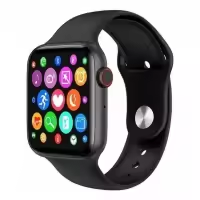
A fitness tracker is a wearable device that monitors physical activity and health data throughout the day. Most devices can track:
- Steps walked
- Calories burned
- Distance traveled
- Heart rate
- Sleep quality
- Stress levels
- Blood oxygen levels
- Workout performance
Popular brands include:
- Fitbit
- Garmin
- Apple
- Samsung
These devices sync with smartphone apps to give users insights into their health trends over time.
How Fitness Trackers Work
Fitness trackers use sensors such as:
Accelerometer
Measures movement to estimate:
- Steps
- Distance
- Activity intensity
Optical Heart Rate Sensor
Uses LED light to detect blood flow and calculate heart rate.
GPS
Tracks outdoor:
- Running routes
- Cycling paths
- Hiking distance
Sleep Monitoring Sensors
Detect:
- Sleep duration
- Sleep stages
- Restlessness
By combining these technologies, trackers create a picture of your daily health habits.
Why People Buy Fitness Trackers
People usually purchase them for several reasons.
1. Motivation to Move More
Many users become more active because the device reminds them to:
- Walk
- Stand
- Exercise
- Meet daily goals
Seeing progress in real time can encourage healthier decisions.
2. Better Sleep Awareness
Poor sleep affects:
- Mood
- Immunity
- Weight
- Productivity
Fitness trackers help users identify:
- Sleep duration
- Sleep consistency
- Wake periods
3. Heart Health Monitoring
Some advanced trackers can detect:
- Resting heart rate
- Irregular rhythms
- Stress changes
This can encourage earlier medical attention.
4. Weight Loss Support
Trackers can estimate:
- Calories burned
- Active minutes
- Exercise intensity
For people trying to lose weight, this can improve awareness.
Are Fitness Trackers Worth It for Weight Loss?
For many users, are fitness trackers worth it becomes especially important during weight loss.
They can help by:
- Increasing accountability
- Encouraging movement
- Tracking calorie burn
- Monitoring progress
- Supporting consistency
However, they are not magic tools.
Successful weight loss still depends on:
- Nutrition
- Sleep
- Exercise
- Stress management
A tracker helps, but it cannot replace discipline.
Pros of Fitness Trackers
Here are the main benefits.
1. Increased Accountability
You can see your habits clearly.
Example:
- 3,000 steps vs goal of 10,000
- Poor sleep patterns
- Sedentary hours
Awareness often drives change.
2. Personalized Health Insights
Trackers reveal trends like:
- Resting heart rate improvement
- Better sleep
- Improved recovery
- Stress changes
3. Goal Setting
Users can create:
- Step goals
- Workout goals
- Sleep goals
- Weight goals
4. Convenience
Instead of manual logging, everything is automatic.
5. Long-Term Progress Tracking
Apps can show:
- Weekly trends
- Monthly progress
- Yearly improvement
Cons of Fitness Trackers
While useful, there are drawbacks.
1. Accuracy Can Vary
No wearable is 100% accurate.
Problems include:
- Incorrect calories
- Missed steps
- Sleep estimation errors
2. Can Become Obsessive
Some users become too focused on:
- Numbers
- Calories
- Sleep scores
This can create stress.
3. Battery Charging
Many devices require charging every:
- 1–7 days
4. Cost
Prices range from:
- Budget: $30–$80
- Mid-range: $100–$250
- Premium: $300+
Comparison Table: Are Fitness Trackers Worth It?
| Feature | Budget Trackers | Premium Trackers |
|---|---|---|
| Step counting | Yes | Yes |
| Heart rate | Basic | Advanced |
| GPS | Sometimes | Usually |
| Sleep tracking | Basic | Detailed |
| Battery | Longer | Shorter |
| Price | Lower | Higher |
| Accuracy | Moderate | Better |
Who Should Buy a Fitness Tracker?
Fitness trackers are worth it for:
Beginners
Ideal for people starting a health journey.
Busy Professionals
Helpful for managing:
- Activity
- Stress
- Sleep
Athletes
Advanced models support:
- Recovery
- VO2 max
- Training load
Older Adults
Useful for:
- Heart monitoring
- Fall detection
- Health reminders
Who Might Not Need One?
A tracker may not be worth it if:
- You already exercise consistently
- You dislike wearing devices
- Data causes anxiety
- You won’t use the app
For some people, simple habits work better.

Fitness Tracker vs Smartwatch
Many people compare wearables.
| Feature | Fitness Tracker | Smartwatch |
|---|---|---|
| Health tracking | Strong | Strong |
| Notifications | Limited | Full |
| Battery life | Longer | Shorter |
| Price | Lower | Higher |
| Fitness focus | Better | Mixed |
Examples of smartwatches:
- Apple Watch Series
- Samsung Galaxy Watch
Fitness-focused devices:
- Fitbit Charge
- Garmin Vivosmart
Scientific Evidence Behind Fitness Trackers
Studies suggest fitness trackers can improve:
- Daily activity
- Weight management
- Exercise consistency
Researchers found people often walk more when wearing a tracker because self-monitoring increases awareness.
However:
Long-term success depends on behavior change—not just technology.
Are Fitness Trackers Worth It Financially?
Here is a simple perspective.
A $150 tracker used daily for 2 years costs:
$150 ÷ 730 days = $0.20 per day
If it helps improve:
- Sleep
- Exercise
- Health awareness
That can be excellent value.
Best Situations Where Fitness Trackers Are Worth It
They offer the most value when you want to:
 Build healthier habits Improve sleep Increase movement Track workouts Monitor heart rate Stay accountable
When Fitness Trackers Are Not Worth It
They may not be worth it if:
 You stop wearing it You dislike data You expect perfect accuracy You want instant results
Tips Before Buying a Fitness Tracker
Before buying, consider:
Battery life
Choose based on usage.
App quality
The app matters as much as the hardware.
Comfort
You must enjoy wearing it.
Health features
Pick only what you need.
Budget
Avoid overspending.
- Best Smartwatches for Health Monitoring
- How to Improve Sleep Naturally
- Home Workout Plans for Beginners
- How Many Steps Per Day Is Healthy?
- Best Weight Loss Apps Compared
Example anchor text:
- learn more in our guide to best smartwatches for health
- read our article on how to improve sleep naturally
Authoritative sources
Consider linking to authoritative sources such as:
Frequently Asked Questions
Are fitness trackers accurate?
Most are reasonably accurate for steps and heart rate, but calorie tracking can vary.
Can fitness trackers improve health?
Yes, they can improve awareness and motivate healthier behavior.
Are expensive fitness trackers better?
Usually they provide:
- Better sensors
- Better apps
- More features
But not everyone needs premium models.
Are fitness trackers worth it for seniors?
Yes, especially for:
- Heart monitoring
- Activity tracking
- Fall alerts
Do fitness trackers work without a phone?
Yes, most collect data independently and sync later.
Final Verdict: Are Fitness Trackers Worth It?
So, are fitness trackers worth it?
Yes — if you:
- Need motivation
- Want accountability
- Enjoy health data
- Want better habits
No — if you:
- Ignore wearable devices
- Dislike tracking numbers
- Expect perfect accuracy
For many people, fitness trackers can be a powerful health tool when used consistently. The real value comes not from the device itself, but from how it changes your daily behavior.