
How Accurate Are Fitness Trackers? How Fitness Trackers Track Sleep Explained
Fitness trackers have become one of the most popular wearable technologies in the world. From counting steps to measuring heart rate and monitoring sleep, modern trackers promise deep insights into your health. But many people still ask: how accurate are fitness trackers and how do fitness trackers track sleep?
🔥 Discover Trending Content
Explore today's featured content with one click.
New Free Games Added Today!
Discover fun new games and explore what's trending today. Check out the latest additions and start exploring.
🎮 Check Them OutIn this guide, you’ll learn how fitness trackers work, how reliable their data really is, and which features provide the most accurate health insights. We’ll also compare tracker technologies, explain sleep monitoring science, and answer the most common questions people search on Google.
What Are Fitness Trackers?
Fitness trackers are wearable devices designed to monitor physical activity and health metrics. Most devices are worn on the wrist and connect to smartphone apps.
Popular trackers include:
- Fitbit
- Apple Watch
- Garmin
- Samsung Galaxy Watch
- WHOOP
These devices track:
- Steps
- Calories burned
- Heart rate
- Sleep quality
- Blood oxygen
- Stress levels
- Workout performance
How Accurate Are Fitness Trackers?
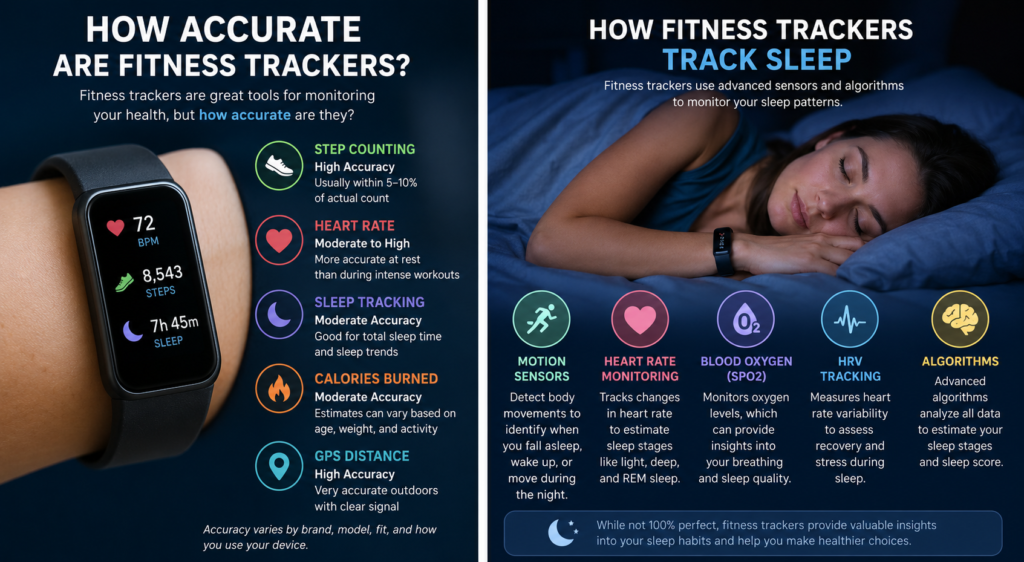
The accuracy of fitness trackers depends on the metric being measured. Some measurements are highly reliable, while others are estimates based on algorithms.
Fitness Tracker Accuracy Comparison Table
| Feature | Accuracy Level | How It Works | Reliability |
|---|---|---|---|
| Step Counting | High | Motion sensors & accelerometers | Very reliable |
| Heart Rate | Moderate to High | Optical sensors using light | Good during rest |
| Sleep Tracking | Moderate | Movement + heart rate analysis | Improving rapidly |
| Calories Burned | Moderate | Algorithms using age, weight, activity | Often estimated |
| Blood Oxygen | Moderate | Infrared light sensors | Useful but not medical-grade |
| GPS Distance | High | Satellite tracking | Accurate outdoors |
How Fitness Trackers Measure Activity
Most fitness trackers use sensors called accelerometers and gyroscopes.
These sensors detect:
- Wrist movement
- Body motion
- Speed
- Orientation
The device then uses machine learning algorithms to interpret whether you are:
- Walking
- Running
- Sleeping
- Cycling
- Exercising
Modern wearables also combine heart-rate data with movement tracking for improved accuracy.
How Do Fitness Trackers Track Sleep?
One of the most searched questions today is: how do fitness trackers track sleep?
Fitness trackers monitor sleep using a combination of sensors and software algorithms.
Main Technologies Used for Sleep Tracking
| Technology | Purpose |
|---|---|
| Accelerometer | Detects body movement |
| Optical Heart Sensor | Measures heart rate patterns |
| SpO2 Sensor | Tracks blood oxygen levels |
| HRV Monitoring | Measures heart rate variability |
| AI Algorithms | Predict sleep stages |
How Sleep Tracking Actually Works
When you sleep, your body behaves differently than when awake.
Fitness trackers analyze:
- Reduced movement
- Lower heart rate
- Breathing changes
- Heart rate variability
- Sleep interruptions
The wearable compares this data against sleep models to estimate:
- Light sleep
- Deep sleep
- REM sleep
- Awake periods
Are Fitness Trackers Accurate for Sleep?
Sleep tracking is improving every year, but it is not perfect.
What Fitness Trackers Do Well
Most trackers are good at:
- Detecting when you fall asleep
- Measuring total sleep duration
- Identifying wake-ups
What They Struggle With
Trackers may be less accurate when estimating:
- REM sleep
- Deep sleep timing
- Exact sleep stages
Medical sleep labs still use advanced equipment like EEG brain-wave monitoring, which consumer trackers do not have.
Fitness Trackers vs Medical Sleep Studies
| Feature | Fitness Tracker | Sleep Lab Study |
|---|---|---|
| Convenience | Excellent | Limited |
| Cost | Affordable | Expensive |
| Daily Monitoring | Yes | No |
| Brain Wave Analysis | No | Yes |
| Medical Diagnosis | Limited | Accurate |
| Home Use | Easy | Difficult |
Heart Rate Tracking Accuracy
Heart-rate tracking uses a technology called photoplethysmography (PPG).
The sensor shines green light into your skin and measures blood flow changes.
Most Accurate Situations
- Resting heart rate
- Walking
- Steady exercise
Less Accurate Situations
- Intense workouts
- Weightlifting
- Loose wrist placement
- Dark tattoos or poor skin contact
Are Calorie Estimates Accurate?
Calorie tracking is one of the least accurate fitness metrics.
Most devices estimate calories based on:
- Heart rate
- Age
- Weight
- Height
- Activity intensity
Actual calorie burn can vary significantly between individuals.
Benefits of Sleep Tracking
Sleep tracking helps users understand habits that affect recovery and energy.
Major Benefits
- Better sleep awareness
- Recovery monitoring
- Stress tracking
- Sleep routine improvement
- Fitness optimization
Athletes often use wearables to monitor recovery and avoid overtraining.
Best Features to Look for in a Sleep Tracker
When choosing a fitness tracker for sleep monitoring, look for:
- Accurate heart-rate sensors
- SpO2 monitoring
- Sleep score analysis
- Smart alarms
- Long battery life
- Comfortable design
- HRV tracking
Click For Fitness Trackers & Straps for Everyday Health Monitoring
External Resources
For deeper research, readers can explore:
Frequently Asked Questions (FAQ)
How accurate are fitness trackers for steps?
Most fitness trackers are highly accurate for step counting, especially during walking and running.
How do fitness trackers track sleep stages?
They use motion sensors, heart-rate monitoring, and algorithms to estimate light, deep, and REM sleep.
Can fitness trackers detect sleep apnea?
Some advanced wearables may identify warning signs, but they cannot officially diagnose sleep apnea.
Are smartwatches medically accurate?
Consumer fitness trackers are not medical devices, although some features can provide helpful health insights.
Which fitness tracker has the best sleep tracking?
Devices from Fitbit, WHOOP, and Apple Watch are considered among the best for sleep monitoring.
Should you wear a fitness tracker every night?
Yes. Consistent nightly wear improves trend analysis and sleep insights over time.
Conclusion
So, how accurate are fitness trackers? The answer depends on what you’re measuring. Step counts and heart-rate monitoring are generally reliable, while calorie burn and sleep stages are still estimations. However, modern wearable technology continues to improve rapidly.
Understanding how fitness trackers track sleep helps users make smarter decisions about recovery, wellness, and overall health. While these devices are not replacements for medical testing, they are powerful tools for building healthier habits.